
 Turkish
 English
 German
 French
 Russian
 Spanish
 Arabic

Most people dealing with hair loss reach a point where an old photo ends up on the desk: a snapshot from a few years back, when the hair looked fuller. That feeling is usually what sends someone looking into PRP in the first place. You are not "bald" yet, but you have noticed the hair losing its old density, more strands than before left behind in the comb. During this in-between stage, one question comes up more than any other: is there a way to strengthen my own hair without going as far as surgery?
PRP is one of the treatments that speaks directly to that question. Online, though, it tends to get squeezed between two extremes. On one side it is marketed as a "miracle hair cure"; on the other it is dismissed as "useless." As with hair transplantation, the truth sits somewhere in the middle.
This page tries to describe PRP without the hype: what it can do, what it cannot, who tends to benefit, and who is likely to be disappointed. The aim is to help you walk into a consultation with the right questions rather than a fixed request to "just give me PRP."
What Is PRP?
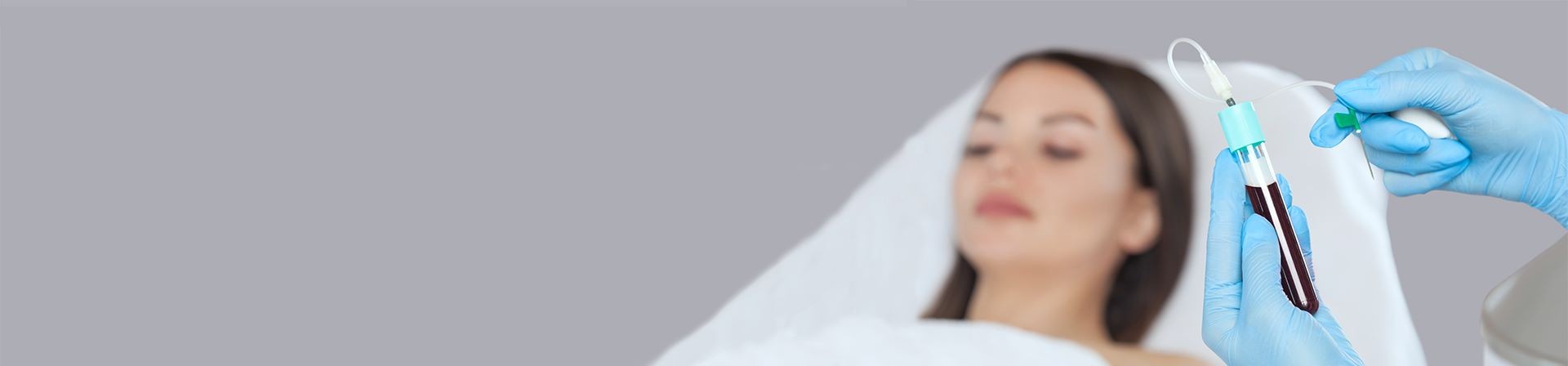
PRP stands for Platelet Rich Plasma. It is a procedure in which plasma prepared from a person's own blood, with a platelet concentration far higher than that of normal blood, is injected into the scalp.
The underlying idea is straightforward. Platelets are not only the cells that help blood clot; they also carry a range of growth factors that kick-start wound healing and tissue repair. When the body repairs an injury, it sends these cells to the site anyway. PRP aims to concentrate that natural repair signal and deliver it directly to the layer of skin where the hair roots sit.
One distinction is worth making from the outset. PRP does not create hair. Applying it to a fully bald area with no follicles left behind will not grow new hair. PRP is aimed at follicles that are still in place but weakened and thinning — hair that has begun to miniaturise. It can support a dormant follicle, but it cannot revive one that has died.
For that reason, it is most accurate to think of PRP not as a way to grow hair, but as a way to support existing hair and slow shedding.
An Injection-Based Procedure, Not Surgery
PRP is often confused with a hair transplant, but it is a completely different procedure. There is no incision, no stitching, no grafts are harvested. Blood is drawn, separated in a centrifuge, and the resulting plasma is delivered into the scalp with fine needles. It is done on an outpatient basis, and most people return to their usual day fairly soon afterwards. That distinction matters, because describing PRP as a "surgery-free hair transplant" sets up the wrong expectation from the start.
How Is Hair PRP Done?
The procedure is completed in a single session, roughly 30 to 45 minutes. The steps run as follows:
- Around 10 to 20 ml of blood is drawn from the arm, much as it would be for a routine blood test.
- The blood is placed in special tubes and spun in a centrifuge. The machine separates the components by density: red cells settle at the bottom, and the platelet-rich plasma stays on top.
- This plasma layer is collected separately. Because it comes from the person's own blood, it is not a "foreign substance."
- Using very fine needles, the plasma is injected superficially across the affected areas of the scalp, a few millimetres apart. A cooling device or a numbing cream may be applied beforehand to reduce discomfort.
What you feel during the session is a mild stinging from the needle entries and a brief tightness across the scalp. Most people find this tolerable; for those with a lower pain threshold, a topical anaesthetic can improve comfort.
Does PRP Grow Hair?
This is the most common question about PRP, and the one most often answered incorrectly. To be clear: PRP will not grow new hair in an area that has none.
Where an area has been fully bald for a long time and the follicles are gone, the "regrowth" a person hopes for is only possible through a hair transplant. PRP has no such power, and any claim promising otherwise is not one to trust.
PRP's realistic contribution is this: by supporting the cycle of follicles that are still alive but starting to weaken, it tries to slow shedding and help existing strands come through thicker and more resilient. In other words, it is aimed at protecting and strengthening what is already there — not creating something from nothing.
The scientific literature includes positive studies on PRP's supportive role in androgenetic (male- and female-pattern) hair loss. However, protocols vary from clinic to clinic — how the blood is prepared, the number of sessions, the intervals — so results vary too. That does not mean PRP does not work; it means it does not deliver the same degree of result, guaranteed, in everyone.
Who Is PRP Suitable For?
The profiles most likely to benefit from PRP tend to look like this:
- People whose hair has begun to thin and lose density, but who do not yet have obvious bald patches
- Those with early-to-mid stage male- or female-pattern (androgenetic) hair loss
- People experiencing temporary heavy shedding (telogen effluvium) after childbirth, stress, a feverish illness or dieting
- Those planning a hair transplant who want to support their existing hair before and after the procedure
- People looking for an additional treatment to complement medical therapy, such as minoxidil
PRP is not a standalone "complete solution"; it usually makes the most meaningful difference as part of a wider plan, alongside other treatments. Who it suits, and in which combination, can only be decided after the scalp has been examined and the cause of the shedding has been investigated.
Who Should Not Have PRP?
Because a person's own blood is used, PRP is generally well tolerated — but it would be wrong to say it can be done for anyone under any circumstances. In some situations the procedure is postponed or not recommended at all:
- Blood disorders, or abnormalities in platelet count or function (since PRP relies on platelets)
- Bleeding and clotting disorders, and blood-thinner use that cannot be paused
- Active infection, or a skin infection at the treatment site, inflamed acne, active psoriasis or eczema
- Pregnancy and breastfeeding, where it is generally not advised owing to a lack of adequate safety data
- Uncontrolled chronic conditions, such as poorly controlled diabetes
- An active course of cancer treatment
- Immune-related hair loss such as alopecia areata, where the type of shedding needs to be correctly identified first
This list does not cover every possibility. Whether PRP is right for you cannot be decided until your medications, past illnesses and current health are assessed at an examination.
Examination and Planning: Why the Cause of Shedding Comes First
Before starting PRP, the real question is not "how many sessions shall we do," but "why is this hair falling out?" PRP adds meaningful value in some types of shedding, yet falls short on its own if there is an underlying deficiency or illness driving the loss.
A thorough assessment usually involves the following.
The scalp is examined with a dermatoscope. The proportion of fine, miniaturised hairs, the follicle density and the pattern of shedding are assessed; this is one of the strongest clues as to whether PRP is likely to help.
Blood tests are requested where needed. Iron and ferritin, thyroid hormones, vitamin D, B12 and, when appropriate, hormonal levels are checked. Plenty of people see their shedding ease noticeably once a simple iron deficiency is corrected; PRP carried out without addressing that would be an incomplete plan.
The type of shedding is distinguished. Whether it is androgenetic loss, temporary (telogen) shedding, or a picture such as alopecia areata changes the approach entirely. PRP does not do the same job in every kind of hair loss.
Expectations are discussed. Setting out what PRP can and cannot do from the very start is the step that most reduces the disappointment that might otherwise follow.
PRP or Mesotherapy? Which One, and When?
These two treatments are often mistaken for one another, yet they differ in a fundamental way. The biggest distinction is in the content: with PRP, the substance delivered into the scalp is plasma obtained from your own blood. Mesotherapy, by contrast, involves injecting the scalp with an externally prepared mixture of vitamins, minerals, amino acids and various active ingredients.
The table below compares the two methods; they are not rivals, though, and often complement one another.
| Feature | Hair PRP | Hair Mesotherapy |
|---|---|---|
| Substance delivered | Plasma obtained from the person's own blood | An externally prepared vitamin-mineral-amino acid mixture |
| Source | Autologous (from the person themselves) | Ready-made solution ingredients |
| Allergy / compatibility risk | Low, as it is the person's own blood | Can vary depending on the contents |
| Blood draw beforehand | Required | Not required |
| Typical aim | Supporting the follicle cycle with growth factors | Delivering nutrients and support directly to the follicle |
| Session logic | A course, then maintenance | A course, then maintenance |
Which is more appropriate depends on the type of shedding, the state of the scalp and the person's general health. In some people the two can be planned alternately or together. The decision rests on examination findings; a blanket ranking of "one is better than the other" is not accurate.
How Many PRP Sessions Are Needed?
PRP is not a one-off procedure; it is applied as a course. The common approach is an initial series of closely spaced sessions, followed by less frequent maintenance.
A frequently used plan can be summarised as follows:
- Initial course: usually 3 to 4 sessions, roughly 2 to 4 weeks apart. The aim is to support the follicle cycle by delivering the growth-factor stimulus in succession.
- Maintenance phase: once the initial course is complete, a repeat every 4 to 6 months is often suggested to preserve the benefit gained.
These figures are an average framework, not a fixed protocol. The number of sessions and the intervals are tailored to the individual, based on the type of shedding, how the scalp responds and the physician's assessment. Some people do well with fewer sessions, while others may need maintenance more often.
One point is worth keeping in mind: PRP's contribution tends to be more visible while the sessions continue. If maintenance is stopped and the underlying shedding process is still active, the benefit gained may fade over time. It is more realistic, then, to think of PRP as part of ongoing care rather than something you "do once and forget."
When Do PRP Results Start to Show?
Patience is the most realistic advice with PRP. It is not a treatment that makes a difference the day after the first session; because the hair cycle plays out over months, any change is gradual too.
The expected course, in broad terms, looks like this:
- First month: no obvious visible change is expected. Some people see a temporary increase in shedding in the early weeks; this is usually linked to the cycle synchronising and is not permanent.
- Months 2 to 3: for most people, the first noticeable effect is a slowing in the rate of shedding. A drop in the number of strands left in the comb and on the pillow is the earliest signal.
- Months 3 to 6: thickening of existing strands, a fuller feel across the scalp, and the recovery of thinned hairs can become apparent during this period.
- Month 6 onwards: the overall effect of the initial course is judged more clearly here, and maintenance is used to try to preserve it.
This timeline reflects an average course. Response varies from person to person; not everyone sees results at the same pace or to the same degree. The most honest description of PRP is a supportive treatment that may help slow shedding and strengthen existing hair, with results that vary.
Combining PRP With a Hair Transplant
Perhaps one of PRP's most established uses is planning it alongside a hair transplant. Two separate contributions are worth distinguishing here.
The first is supporting the existing hair before and throughout the process. A hair transplant moves new follicles into the thinning area, but the surrounding natural, weakened hair can keep shedding. PRP tries to strengthen that existing hair, aiming to keep the overall appearance after the transplant more cohesive.
The second is supporting the scalp's healing in the period after the transplant. Some physicians add PRP after the procedure to support healing and the follicle cycle in the area where the grafts sit. Protocols for this vary from clinic to clinic, and research into its effect is ongoing; it is therefore best seen not as a step that "guarantees the transplant's success," but as an option intended to support the process.
In short, PRP and a hair transplant are not rivals but two tools that do different jobs: the transplant carries new follicles, and PRP tries to support what is already there. How best to plan the two together is decided at examination.
Side Effects and Risks of PRP
Because PRP uses the person's own blood, the risk of an allergic reaction or transmission of infection is low — but "no risk at all" would be the wrong way to put it. Every injection procedure has its own side effects, most of them temporary.
Common issues, which usually settle on their own before long:
- Redness, mild swelling and tenderness at the injection sites
- Small bruises from the needle marks
- A feeling of tightness across the scalp or a headache in the first hours after the procedure
- Temporary itching
Less common but possible:
- Infection at the injection site (sterile conditions reduce this risk)
- Temporary change in sensation related to the procedure
- A vasovagal reaction (dizziness or faintness triggered by the needles)
Most of these subside within a few days. If you notice increasing pain, spreading redness, discharge or a fever, however, contact the clinic where you had the procedure without waiting. PRP's safety profile is generally good; even so, as with any medical procedure, it is essential that it is carried out in appropriate conditions and under a physician's supervision.
What to Watch For After PRP
Aftercare is simple, but paying attention to a few points improves comfort and helps the area heal smoothly.
- Washing your hair: most protocols suggest leaving the scalp unwashed for the first day. From the next day it can be washed gently with lukewarm water — without rubbing or scratching with the nails. Your physician will specify the exact timing.
- Heat and sweating: avoiding the sauna, steam room and heavy, sweat-inducing exercise on the day of the procedure is generally advised for the first 24 to 48 hours.
- Sun and tanning beds: it is best to avoid direct, intense sun exposure on the first day.
- Chemical treatments: waiting a few days is advised before chemical processes such as hair dye, keratin or perms.
- Alcohol and blood thinners: to reduce the tendency to bruise and bleed, avoid alcohol around the time of the procedure, and always tell your physician about any blood-thinning medication.
These are general pointers; the specific instructions given by the team who carry out your procedure take priority.
How Long Does PRP Last?
Unlike a hair transplant, PRP's result is not a case of "done once, stays put." PRP does not stop the underlying shedding process; it tries to slow it and support the existing hair. Because androgenetic loss is a progressive process rooted in genetics and hormones, that process can pick up where it left off once PRP is stopped.
The way to preserve PRP's benefit, then, is to keep it regular with maintenance sessions. When the treatment is stopped, the support gained may fade over time. This is best seen not as a shortcoming but as the nature of the method: PRP is a "maintenance" treatment, not a permanent "repair."
In the long run, the most realistic approach is to position PRP not as a solution on its own, but as part of a joined-up plan — alongside medical treatment, proper hair care, a hair transplant where appropriate, and regular follow-up. Which combination suits you is something your physician decides by looking at the type and stage of your hair loss.