 Turkish
 English
 German
 French
 Russian
 Spanish
 Arabic

The eyebrow is one of the most looked-at yet least noticed features of the face. When it sits where it should, nobody pays it any attention; the moment it thins out or a gap appears, the meaning behind a glance and the balance of an expression shift all at once. For brows that have been plucked and shaped too thin over the years, damaged by a burn or an accident, or simply lost to age, makeup only goes so far. Once the daily ritual of pencil, gel and tinting starts to feel like a chore, many people begin looking for something that lasts.
This is usually where the idea of an eyebrow transplant comes up. At its core it works the same way as a hair transplant: shed-resistant follicles are moved, one by one, into the areas where the brow has thinned. What sets brow work apart is the millimetre-level artistry it demands. Eyebrow hairs leave the skin at a very shallow angle, almost lying flat; they point upward at the inner corner, drift outward in the middle and turn down toward the tail. Where each hair is placed, and at what angle, is what decides whether the result looks natural or looks stuck on.
We have laid this page out in the order a patient tends to wonder about things: what the procedure actually involves, who makes a suitable candidate, why angle and direction matter so much, how many grafts are needed, why shock loss happens, and whether transplanted brows really last. The aim is not to push you toward a decision, but to help you walk into the consultation room with the right questions.
What Is an Eyebrow Transplant?
An eyebrow transplant is a surgical procedure in which follicles taken from your own body are relocated to the brow area. No new hair is created. Individual follicles, usually harvested from the nape where they are known to resist shedding, are placed into the thin or bare parts of the brow. Because relocated follicles tend to keep the characteristics of the area they came from, the hairs that grow in are your own living hairs.
These days the work is done mainly with the FUE (Follicular Unit Extraction) method. There are no incisions and no stitches; follicles are collected one at a time with a micromotor and set into micro-channels opened with fine instruments. Because the brow is a small, aesthetically sensitive area, the work here is carried out with far finer tools than on the scalp, using single-hair grafts.
In brow work the real question is not how many grafts are used, but the angle each one sits at and the direction it faces. That is the detail that determines how natural the result looks.
Unlike scalp hair, eyebrow hairs emerge from the skin at a very tight angle, practically lying down. At the inner edge they point up, through the middle they angle slightly outward, and at the tail they turn down. When this natural flow is not copied, even a technically successful transplant can look planted rather than grown. That is why an eyebrow transplant is far more an exercise in direction and symmetry than in placing grafts.
Why Do Eyebrows Thin and Fall Out?
Before deciding on a transplant, it helps to understand why the brows thinned in the first place, because the underlying cause can sometimes be treated on its own, and a transplant may not be needed at all. The common reasons include:
- Years of plucking and shaping: repeatedly tweezing or waxing the same area can tire and eventually blunt the follicles for good. This is one of the most frequent causes of sparse brows.
- Ageing: the hair cycle slows over time, and brows tend to thin first at the outer, tail end.
- Thyroid conditions: hypothyroidism in particular is classically linked with noticeable thinning of the outer third of the brow.
- Nutritional deficiencies: low iron, zinc, vitamin D or B12 can affect hair health.
- Skin conditions and trauma: psoriasis, eczema, burns, and accident or surgical scars can cause localised hair loss.
- Autoimmune loss: alopecia areata can affect the brows too, with the immune system targeting the follicles.
- Chemotherapy and certain medications: systemic treatments can cause temporary or lasting hair loss.
This distinction has a practical consequence. If there is an active thyroid problem or a vitamin deficiency, that needs to be corrected first. A transplant carried out before the cause is addressed will keep losing the surrounding existing hairs and make the outcome unpredictable.
Who Is a Suitable Candidate, and Who Is Not?
The first question with an eyebrow transplant is not “which technique” but “am I a suitable candidate.” Suitability is judged by weighing several things together: the cause of the thinning, the existing structure of the brow, the state of the donor area, general health, and how realistic your expectations are.
A good candidate usually looks something like this:
- People whose brows have thinned through years of plucking and shaping, or with age
- Those with localised brow loss from a burn, accident, surgery or scar tissue
- People born with naturally thin or sparse brows
- Those who have lost part of the brow entirely and are tired of covering it with makeup
- People whose underlying medical cause (thyroid, deficiencies) has been brought under control
In some situations the procedure is postponed or advised against. With autoimmune loss such as active alopecia areata, follicles placed while the condition is active can themselves be targeted, so the disease needs to be controlled first. Untreated thyroid disease or uncorrected vitamin deficiencies are dealt with medically before anything else. Uncontrolled diabetes, conditions that impair wound healing, bleeding or clotting disorders, blood-thinning medication that cannot be paused, an active skin infection or eczema in the area, a marked tendency to keloid (excess scar tissue) and unrealistic expectations are the main reasons a doctor would delay the procedure or judge it unsuitable. A transplant is still possible in people who have had microblading done, but the planning takes that into account.
The final decision comes not from a web page but from the doctor, after an examination and, if needed, some simple blood tests.
Consultation and Planning: Half the Result Is Decided at the Tip of the Pencil
In an eyebrow transplant the design stage matters no less than the procedure itself. A thorough consultation typically covers the following.
First, the cause of the thinning is investigated. If there is clear loss in the outer third of the brow, thyroid function is looked into; if the thinning is more general, diet and overall health are reviewed. Blood tests are requested where necessary, and any correctable cause is addressed before anything else.
The brow design is then worked out together. The starting point, the peak (the highest point of the arch) and the tail where it ends are mapped against your facial proportions, the position of your eyes, and the imaginary lines running from the edge of the nostril past the outer corner of the eye. Symmetry matters here, but not “perfect mirror symmetry,” because no human face is truly symmetrical. The aim is for the two brows to form a balanced pair that sits naturally on the face. The design is drawn onto the face with a brow pencil, and nothing goes ahead until you have approved it in the mirror.
The graft budget and donor area are assessed. How many follicles are needed, where they will come from, and whether a single session will be enough all become clear at this stage. Fine single-hair grafts taken from the nape are the best material for brows, because their thickness and exit angle are the closest match to natural brow hair.
The Technique: How Is an Eyebrow Transplant Done?
An eyebrow transplant is carried out under local anaesthetic and takes on average two to four hours; the time varies with the number of grafts needed and whether one brow or both are being worked on. The stages run as follows.
Selecting and harvesting donor follicles. Follicles are mostly taken from the nape, one at a time, with a micromotor. The best grafts for brows are single-hair, fine and soft in texture, because a brow built from thick, multi-hair grafts does not look natural. In some cases, depending on the doctor’s assessment, follicles may also be drawn from behind the ear or other areas.
Opening the channels: the moment angle and direction are set. This is the stage that truly decides how natural an eyebrow transplant will look. Micro-channels are opened in the recipient area at the tight angles needed to make the hair lie flat against the skin. The upward direction at the inner corner, the slight outward drift in the middle and the downward turn at the tail are all preserved. It is meticulous, patient work; if the channel angle drifts even a degree or two, the hairs can stand up and break the natural flow.
Placing the grafts. The single-hair grafts are set into the open channels one by one. Even the direction of each hair’s curl is taken into account, so that the natural curve faces up or down and the hair lies into the brow as it grows.
Because the brow is a small area, the work asks for precision more than graft numbers. For that reason an eyebrow transplant is usually a case of “few grafts, great care.”
How Many Grafts Are Needed?
A single brow generally takes somewhere between 100 and 300 grafts; when both brows are worked on together, the figure is most often in the range of 200 to 600. The exact number varies from person to person, depending on how much natural hair the brow still has, how much of a gap needs filling and the density you are after. Because it involves relatively few grafts, an eyebrow transplant is a much shorter procedure than a scalp transplant.
Numbers alone do not tell you much about success. Two hundred and fifty grafts placed at the right angle and direction can look far more natural than 400 put in without a plan.
Eyebrow Transplant vs Microblading (Permanent Makeup): What Is the Difference?
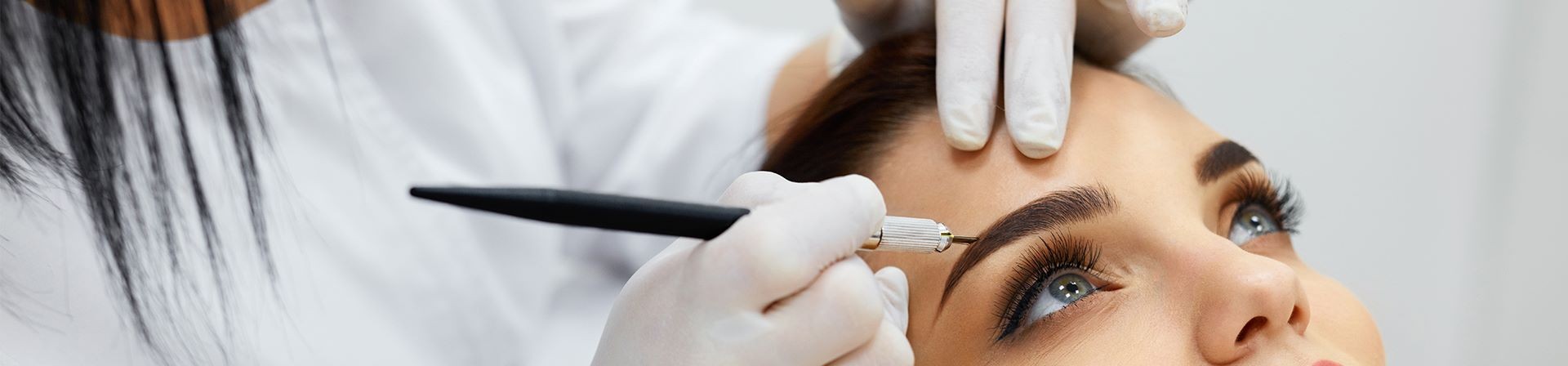
These two are often confused, but they are entirely different things. An eyebrow transplant is a surgical procedure; your own living follicles are relocated and you get real, growing hairs. Microblading (permanent makeup) is a tattooing technique; pigment is deposited into the upper layer of the skin to mimic the look of hairs, with no actual hair involved.
It helps to break the difference down under a few headings:
| Feature | Eyebrow Transplant | Microblading (Permanent Makeup) |
|---|---|---|
| What is done | Your own follicles are relocated | Pigment is worked into the skin |
| Result | Real, growing hairs | Colour that mimics hairs |
| Longevity | Many years; lasting for most patients | Usually fades in 1–3 years and needs redoing |
| How it feels | Raised, like real hair | Flat on the surface of the skin |
| Type of procedure | Surgical, under local anaesthetic | Cosmetic, not surgical |
| Upkeep | Trimming as it grows out | Periodic touch-ups |
In short: microblading makes makeup permanent, while an eyebrow transplant aims to bring the brow itself back. Some people use both, having a transplant first to build density and then, if needed, fine touches of microblading. Which one suits you depends on your expectations and the current state of your brows.
What Happens on the Day of the Procedure?
An eyebrow transplant is an outpatient procedure that does not require an overnight stay. A typical day unfolds like this.
The morning begins with photographs and a final check of the drawing. The brow design is reviewed together in the mirror one last time; this is the moment you have the final say, so speak up freely. The donor area (usually the nape) and the brow are then numbed with local anaesthetic. The anaesthetic injections are the part most people feel; they last a few minutes, after which the area goes numb. We would not claim it is “painless,” but most patients remember the day less for pain than for sitting still for a long stretch.
Harvesting and placement take two to four hours depending on the number of grafts. During this time you lie back and can listen to music if you like. When it is done the brow is left uncovered; small red dots and mild puffiness are normal. Your medications, first-day advice and washing instructions are explained in writing, and you go home the same day.
Week-by-Week Recovery Timeline
Healing varies from person to person; the timeline below reflects the average course seen in most patients.
First 2–3 days: mild redness, small scabs and a little swelling can appear around the brow. The area is not touched or rubbed. When washing your face, take care to keep water off the brow. Slight swelling may show around the forehead and eyes; it settles within a few days.
Days 3–7: the first wash is done as directed by your doctor. Small scabs form over each graft; these should come away on their own with gentle washing, without scratching. Because scratching can dislodge grafts, the single most important rule in this period is patience. Most people can return to social life from this week; the early redness fades with time, not with makeup.
Weeks 1–2: the scabs come away completely and the area looks close to normal. At this stage the brows seem to sit in place, but the real process has not started yet.
Weeks 2–6 — shock loss: most of the transplanted hairs shed during this period. This does not mean the procedure has failed; on the contrary, it is an expected stage. The follicle, whose blood supply was briefly interrupted during transfer, enters a resting phase and releases its current hair; the root stays alive under the skin and begins a new growth cycle. These weeks are the hardest part of the process psychologically — knowing about it in advance stops you panicking every time you look in the mirror.
Months 2–4: new hairs start to come through as fine, colourless strands. Growth is not simultaneous; part of the brow may appear before the rest, and that is normal.
Months 4–6: the brows become more defined, thicker and coloured. The shape starts to settle during this period.
Months 6–12: this is when the final result comes into view. The brows reach full density and settle into their natural flow. The lasting density of the result varies with a person’s hair type, graft survival rate and tissue characteristics.
Practical Notes for Returning to Daily Life
- Work and social life: most people are back within 3–7 days; aside from mild early redness there is no real obstacle.
- Washing and makeup: no water or cosmetics touch the brow until the day your doctor allows (usually the first week).
- Exercise and sweating: because sweating raises the risk of infection, strenuous exercise is usually put off for 2–3 weeks.
- Sea, pool, sauna: salt and chlorinated water and steam mean most doctors ask you to wait 3–4 weeks.
- Sun: direct sun is avoided in the first weeks; shade and a hat are recommended outdoors.
- Tweezing and shaping: transplanted brows are not plucked until they have settled; shaping begins only with your doctor’s go-ahead.
Risks and Complications
An eyebrow transplant is done under local anaesthetic and is reported to have a low complication rate; even so, no surgical procedure is “risk-free,” and we would not advise deciding without reading this section.
Common issues that usually clear up on their own: temporary redness around the brow and eyes, mild swelling, scabbing, a few days of tenderness in the area and, rarely, a temporary reduction in sensation.
Less frequent problems: folliculitis (inflammation of the follicle, appearing as small pimple-like bumps that usually settle with simple treatment), infection, bleeding and scarring. Hairs that grow in the wrong direction or at the wrong angle are among the most common aesthetic problems in inexperienced hands; in that case the hairs grow upright or the wrong way and spoil the natural look.
There is also a group of “non-medical” risks that affect satisfaction the most: lower density than hoped for, a graft survival rate that stays low because of individual tissue characteristics, a difference in symmetry between the two brows, and a poorly designed brow shape. The antidote to this group of risks is not technology but careful planning, realistic expectations and an experienced team.
If you notice increasing pain, spreading redness, discharge or a fever after the procedure, you should call your centre without waiting. Getting in touch early means most problems can be sorted out with simpler measures.
Longevity and the Long Term: Do Transplanted Brows Keep Growing?
The two most common questions about eyebrow transplants are longevity and growth, and the two are connected.
Because the follicles taken from the nape resist shedding, transplanted brows are expected to hold for many years, and for most patients the result is lasting. There is an important detail here, though: transplanted hairs keep the characteristics of the area they came from for a while. Since scalp hairs grow faster and longer than brow hairs, transplanted brows can grow faster than a normal brow in the early months.
The practical consequence is that transplanted brows need regular trimming. Most people turn a trim every few weeks into a grooming routine. Over time, as the hairs adapt to their new location, the growth rate can slow a little, but this early upkeep is a natural part of the process and worth knowing about in advance.
After shock loss, not all but most of the hairs that come through take hold permanently; the survival rate varies from person to person. In some patients a second small session may come up, to reach the desired density or fine-tune symmetry; that possibility is discussed at the examination.
The same principles apply to other parts of the face and body: beard and moustache work, eyelash restoration and body-hair transplants are the same attention to angle and direction adapted to different areas. For those who want to lift and reshape the brow without a transplant, a non-surgical brow lift offers a separate route; and anyone looking only for colour and form can weigh pigment-based options against a transplant.