
 Turkish
 English
 German
 French
 Russian
 Spanish
 Arabic

A tummy tuck is rarely just “cutting away loose skin,” as the name might suggest. Its proper name is abdominoplasty, and in most cases it does three jobs at once: it removes excess skin and fat from the lower abdomen, it re-approximates abdominal muscles that pregnancy or rapid weight change have split down the middle, and — when appropriate — it adds liposuction to refine the contour. That is why the operation is a more thorough repair than many patients first imagine.
The people who ask about it most often are women whose bodies changed after pregnancy and childbirth and who cannot recover the old shape through diet and exercise alone. In many, what remains is loose skin around the navel, stretch marks, and an abdomen that bulges forward — and that bulge is usually not fat but a muscle wall that has parted in the middle. No amount of training brings separated muscle back together on its own. This is precisely where a tummy tuck differs from every other approach.
This guide walks through the operation from every angle: the difference between a full and a mini tummy tuck, what muscle repair actually involves, when liposuction enters the picture, what the day of surgery is like, a week-by-week recovery timeline, where the scar sits, and the risks that deserve an honest conversation. The aim is simple — to leave you well enough informed to ask your surgeon the right questions when you come in for an examination.
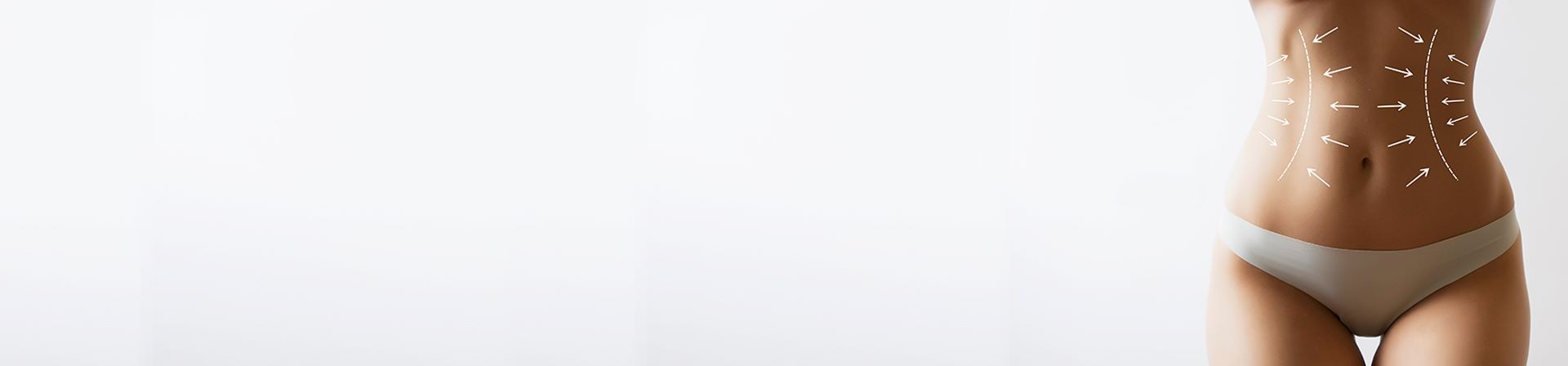
What Is a Tummy Tuck (Abdominoplasty)?
A tummy tuck is a surgical procedure in which excess skin and fat over the lower abdomen are removed and a lax abdominal wall is tightened. It is not a weight-loss method; the goal is not to make you thinner but to re-organise skin and tissue that have stretched and sagged.
The operation has three components, and how much of each is done varies from one patient to the next:
- Removing excess skin and fat. Skin that has lost its elasticity below the navel, along with the fat that accompanies it, is removed. A good portion of the lower-abdominal stretch marks come away with this skin.
- Repairing the abdominal muscles. The flat abdominal muscles (the rectus muscles) that have split down the middle are drawn back toward the midline with sutures. This is the step that flattens the abdomen, and it is what separates a tummy tuck from a simple skin operation.
- Reshaping the abdomen. The remaining skin is drawn downward, the navel is brought out at its new position, and the contour is redefined.
The difference between a tummy tuck and liposuction is often blurred. Liposuction only removes fat; it does not tighten skin and it cannot repair separated muscle. In a younger patient with firm skin and nothing more than a localised pocket of fat, liposuction alone may be enough — but where there is loose skin and muscle separation, it cannot solve the problem. The two procedures are frequently performed together in the same session, a combination we describe in more detail below.
What Is Separated Abdominal Muscle (Rectus Diastasis)?
Running down the front of the abdomen, from the ribs to the pubic bone, are two flat strips of muscle — the “six-pack” muscles. Normally these two strips sit close together, joined at the midline by a thin band of connective tissue. A growing uterus during pregnancy, rapid or excessive weight gain, or certain structural predispositions can push these muscles apart, widening the gap between them. This is called rectus diastasis (diastasis recti).
Separated muscle makes the abdomen bulge forward. That bulge does not disappear even on an empty stomach in the morning, and pulling the belly in does not correct it. When a woman says “I lost the weight but my belly never went away,” she is often describing exactly this. And it is not only a cosmetic matter — in more advanced cases, muscle separation can contribute to lower-back pain, poor posture, and difficulty managing intra-abdominal pressure.
Repairing this separation is the most valuable part of a tummy tuck. After lifting the abdominal skin, the surgeon draws the two separated muscles back to the midline with permanent sutures; this is known as muscle plication. Until that step is done, no amount of skin removal will genuinely flatten the abdomen. Because diet and exercise cannot rejoin the separated muscle, closing the gap in patients with significant diastasis is only possible through surgical repair.
Who Is a Good Candidate, and Who Is Not?
A tummy tuck suits people who have not been able to recover their abdominal shape through diet and exercise, whose general health is fit for surgery, and whose expectations are realistic. A typical candidate might be:
- A woman left with loose skin, stretch marks and muscle separation after pregnancy and childbirth;
- Someone who, after significant weight loss, is left with sagging, inelastic excess skin over the abdomen;
- Someone close to their goal weight, whose weight has been stable for a while and who can keep it there.
Circumstances that delay candidacy or change the plan deserve an equally frank discussion:
- Plans for pregnancy in the near future. A tummy tuck does not prevent pregnancy; however, a new pregnancy can loosen the repaired muscles and stretched skin all over again. For patients planning children soon, it makes more sense to leave the operation until after childbearing is complete, to protect the result.
- An ongoing, significant weight-loss goal. Because a large change in weight will reshape the abdomen again, it gives a longer-lasting result to plan surgery once you are near your ideal weight and have held it for a time.
- A high body mass index. In advanced obesity a tummy tuck is both riskier and less satisfying in its outcome; for these patients, weight management comes first.
- Uncontrolled diabetes, bleeding disorders, heart or lung disease, active infection — conditions that raise the risks of surgery and anaesthesia.
- Smoking. It is not an absolute barrier, but smoking markedly impairs blood flow to the abdominal skin, and a tummy tuck is one of the operations that stresses that circulation the most. For this reason you will be asked to stop at least three to four weeks beforehand and to stay off cigarettes for at least a few weeks afterward.
Managing expectations is part of the assessment too. A tummy tuck aims for a flatter, firmer abdominal line — but no one can be promised a “scar-free” result or an outcome that never changes. The scar is permanent, the result is shaped by each person's own tissue, and the body goes on living over time.
Examination and Planning: How the Decision Is Made
The first examination is as decisive as the surgery, because this is where every choice is made — full or mini tummy tuck, whether liposuction is added. Your surgeon weighs several things together: how much excess skin there is and where it concentrates, the elasticity of the skin and the pattern of stretch marks, the position of the navel, the location of any excess fat, and — most importantly — whether the abdominal muscles are separated.
A simple manoeuvre is often enough to assess muscle separation: with the patient lying on their back and lifting the head slightly, the gap in the midline becomes possible to feel by hand. Where needed, an ultrasound may be requested to clarify the degree of separation and whether there is a hernia in the abdominal wall. The presence of an umbilical hernia changes the plan, because the hernia repair can be done in the same session.
The second half of the consultation is a health screen. Blood tests and an anaesthetic assessment are standard. You will need to give a complete account of the medicines you take — particularly blood thinners, hormone-containing medications and any herbal supplements you use regularly — because some of these are stopped for a set period before surgery. Be sure to mention any previous abdominal operations and existing scars, including a caesarean, as these affect where the incision is planned.
One point matters above all: no photograph, phone call or internet search can replace a physical examination. The same description of a “saggy belly” can hide quite different problems underneath, and each calls for a different technique. The decision is formed where two things meet — the surgeon setting out what is anatomically possible, and the patient explaining what they hope for.
Technique Options: Full, Mini and Combinations
A tummy tuck is not a single operation but a family of techniques scaled to the patient's problem. The main distinction is between a full and a mini tummy tuck, to which the extent of muscle repair and any liposuction are added.
| Mini Tummy Tuck | Full Tummy Tuck | |
|---|---|---|
| When it fits | Limited excess skin/fat below the navel only, mild laxity | Sagging above and below the navel, marked muscle separation |
| Muscle repair | Below the navel only, limited | Along the whole midline, ribs to pubis |
| Navel | Usually stays in place | Reshaped and brought to a new position |
| Incision length | Shorter, above the pubic area | Hip to hip, along the underwear line |
| Operating time | Usually 1–2 hours | Usually 2–4 hours |
| Anaesthesia | General (sedation in some cases) | General |
| Recovery | Relatively quicker | Longer, more gradual |
Mini Tummy Tuck
A mini tummy tuck suits a limited group of patients whose problem is gathered below the navel only. The typical candidate has mild skin laxity and a small amount of excess fat below the navel, no significant sagging above it, and muscle separation that is either absent or confined to the lower abdomen.
The incision here is shorter and usually stays on a line above the pubis, close to a caesarean scar. The navel is mostly left untouched. Because the work is confined to the lower abdomen, recovery tends to be quicker. But the limits of a mini tummy tuck are clear: it does not address the upper abdomen and it does not tighten the whole abdominal wall. So although “a smaller operation” sounds appealing, in a patient whose problem does not fit it, a mini tummy tuck falls short and disappoints. The right technique is not the smallest operation but the one that matches the patient's anatomy.
Full Tummy Tuck
A full tummy tuck is the standard answer to the broader changes that follow pregnancy or significant weight loss. The incision runs from hip to hip and is planned as low as possible, kept within the line of underwear or a bikini bottom. The surgeon lifts the abdominal skin from the navel up to the ribs; this wide access is what makes muscle repair along the entire midline possible.
Once the muscles are sutured at the midline, the excess skin is drawn down and removed. Because the skin comes down, the navel is brought out through a new opening and reshaped — one of the technical details that distinguishes a full from a mini tummy tuck. Much of the stretch marking on the lower abdomen is removed with the excised skin; the stretch marks above the navel are carried lower but not erased.
Combining with Liposuction
A tummy tuck and liposuction are often performed in the same session. The tummy tuck addresses excess skin and muscle separation; liposuction refines the localised fat that the tummy tuck cannot directly reach — particularly the flanks (love handles) and the sides of the abdomen. The approach that uses both to shape the whole waistline is sometimes called a lipoabdominoplasty.
The advantage of the combination is dealing with both the sagging and the side fat in a single operation. But every added procedure widens the scope of the surgery and the circulatory demand on the tissue; for that reason, how much fat is removed and how it is balanced against the tummy tuck is planned by the surgeon in a way that does not put skin circulation at risk. Liposuction is not added for every patient — the need for it is decided at examination.
Postpartum Recovery (Mommy Makeover)
Pregnancy and breastfeeding change not only the abdomen but frequently the breasts as well. Combined plans in which a tummy tuck is done in the same session as a breast lift or augmentation are popularly known as a “mommy makeover.” The idea is to address more than one area within a single anaesthetic and a single recovery.
Combined operations are not right for everyone; as the total time lengthens, the burden of anaesthesia and recovery grows with it. Which procedures can be combined is judged according to the patient's health and surgical safety. How the breasts can be addressed after childbirth is a separate topic.
What the Day of Surgery Is Like
A tummy tuck is performed under general anaesthesia in a hospital setting. You arrive in the morning on an empty stomach; the anaesthetic team makes its final assessment, and your surgeon marks the incision and plan on your abdomen while you are standing. These markings are made standing up because lying down completely changes how the skin and the sagging distribute.
Depending on the technique and any added procedures, surgery usually takes between one and four hours. Once the incision is made, the skin is lifted, the muscles are repaired, fat is removed where needed, the excess skin is excised, and the wound is closed with sutures. At the end of the operation it is common to place thin drains to carry off collected fluid; these reduce swelling and lower the risk of fluid build-up (seroma). A compression garment or elastic bandage is applied to support the abdomen.
When you wake, a sense of tightness and pressure across the abdomen is normal; because the muscles have been repaired, this tightness is especially pronounced and makes standing upright difficult in the first days. For this reason patients rest in the early days slightly bent forward at the waist with the knees flexed; this position eases tension along the incision. For most patients, pain is manageable with regular pain relief.
The hospital stay is usually one night; it may be longer in more extensive cases and shorter in limited mini tummy tucks. To reduce the risk of clots forming in the legs, you will be asked to start walking early the day after surgery — supported and leaning slightly forward. When you are discharged, someone should be with you to accompany you, and you should not drive in the first days.
A Week-by-Week Recovery Timeline
The timeline below is a general framework. Everyone heals at their own pace, depending on the scope of the technique, whether liposuction was added, and individual tissue. Your own surgeon always gives the definitive clearances at your follow-up visits.
First 72 hours. This is the most delicate period. You rest slightly bent forward at the waist with the knees supported; this posture protects the incision. Walking in short bursts, with support, is the simplest measure to cut the risk of clots. The drains stay in place through these days and the amount of fluid coming out is monitored. The compression garment is worn continuously.
Week 1. Swelling and bruising are at their most pronounced; how the abdomen looks now does not reflect the final result. The drains are usually removed once the fluid draining off falls away, most often within the first week. When you can shower depends on the dressing regimen and your surgeon's approval. The need to stand bent forward may persist but eases steadily.
Week 2. Most patients can stand more upright by now and begin to meet basic daily needs without help. A good number of people in desk jobs can return to work once they no longer need pain relief; for jobs on your feet or requiring physical effort, this takes longer. Movements that strain the abdomen, heavy lifting and straining are still off-limits.
Weeks 3–4. Gentle walks are cleared. The compression garment continues through this period; total use is usually a few weeks and varies with your surgeon's advice. The abdomen still feels tight, and numbness around the navel is normal.
Week 6. For most patients, a gradual return to sport that does not strain the abdominal muscles begins around now. Sit-ups, weightlifting and exercises that work the abdominal wall directly are usually held off longer — often to week 8 or beyond — to let the muscle repair firm up. Swimming and pool clearance may be given in this period if the wound has fully healed.
Months 3–6. Swelling largely resolves, the abdomen softens and begins to take on its true shape. Changes in sensation around the navel come back partly or fully over this time; in some patients a small area stays permanently numb. The scar starts to fade from its red, prominent stage.
Month 12. This is when the picture comes closest to the final result in both shape and scar. The scar may take even longer than this to reach its final appearance in some patients. Follow-up visits continue at planned intervals throughout this timeline.
A practical note: in the early months, sun can permanently darken the scar. Even once you are cleared to swim, protecting the scar for at least six months with a high-factor sunscreen or a covering swimsuit helps it fade better.
Where the Scar Sits, and How Visible It Is
The scar is the most-asked question about a tummy tuck, and the honest answer is this: the scar is permanent. By the nature of the operation, removing excess skin requires an incision, and that incision leaves a permanent line. The goal is not to erase the scar but to keep it as hidden and as fine as possible.
In a full tummy tuck the scar is a horizontal line running from hip to hip, planned as low as possible — to sit within underwear or a bikini bottom. In addition, a circular scar forms around the navel. In a mini tummy tuck the scar is shorter and stays confined above the pubis. Where possible, an existing caesarean scar can be joined with the new incision so they gather into a single line; this is better than adding a separate scar, and it is assessed at examination.
A scar's course over time usually goes like this: the line that looks red and raised for the first two to three months begins to fade from about the sixth month, and in most patients settles into a fine line close to skin tone within 12 to 18 months. The final quality of the scar depends on the person's skin, on smoking and on aftercare; it would not be right to say everyone gets the same result. Supports such as silicone gel or tape can help healing, and scar care is a topic in its own right.
Risks and Complications
No surgical procedure is without risk, and because a tummy tuck is a relatively extensive operation, its risks should be clearly understood. The following are not seen in most patients, but they can occur — and the decision to operate should be made with this knowledge in hand.
General surgical and healing-related risks:
- Fluid build-up (seroma): a collection of fluid under the skin, and one of the more common issues after a tummy tuck. Drains and the compression garment are there to reduce this risk. Collected fluid sometimes needs to be drained with a needle.
- Bleeding and haematoma: a collection of blood at the surgical site; it sometimes needs to be evacuated with a small procedure.
- Infection: managed with antibiotics and wound care; rarely it calls for a further procedure.
- Delayed wound healing and tissue loss: healing may lag along part of the incision. This risk is markedly higher in smokers, because smoking impairs skin circulation.
- Altered sensation: numbness below and around the navel is common and usually recedes over months; a small area may stay permanently numb.
- Prominent or raised scarring (hypertrophic scar/keloid): depending on the person's skin, a scar may develop more prominently than expected.
Issues more specific to tummy tucks:
- Problems involving the navel: the relocated navel may have healing difficulties or a change in shape around it.
- Contour irregularity or asymmetry: slight differences between the two sides can occur; if marked, they may need correction.
- “Dog ears” — excess skin at the ends of the incision: small puckers of skin can remain at the incision ends and are corrected with a small procedure where needed.
Risks related to general anaesthesia and immobility: as with any major operation, there are anaesthetic risks and the risk of clot formation in the leg veins (deep vein thrombosis). Such a clot travelling to the lungs (pulmonary embolism) is rare but serious. Early, regular walking and blood-thinning measures where needed are there to reduce this risk.
We set this list out not to frighten you but to bring it into your decision. Appropriate patient selection, an experienced team and regular follow-up either prevent most of these risks or catch them early. Even so, no claim of “no risk at all” or “nothing can possibly go wrong” reflects reality.
Durability and the Long Term: Will the Result Change?
The results of a tummy tuck are long-lasting, but the body goes on living. Skin that has been removed does not come back and the repaired muscles stay put; in that sense the operation delivers a lasting change. Against that, two factors can affect the result over time: significant weight change and a new pregnancy.
Weight stability is the most decisive factor. Gaining and losing significant weight after surgery can undo the result, both by new fat deposition and by the skin loosening again. Preserving the outcome depends largely on keeping weight steady.
A new pregnancy can separate the repaired muscles once more and loosen the stretched skin again. The operation does not prevent pregnancy, and having had a tummy tuck does not medically stand in the way of a healthy pregnancy; but in terms of the result, it makes more sense to operate on patients who have finished planning children. If an unexpected pregnancy occurs after surgery, it is enough to share this with the doctor following you.
Ageing and gravity make themselves felt over time too; no operation can halt those natural processes. Even so, regular activity, a balanced diet and a stable weight are the three habits that contribute most to preserving the result over many years. For patients who think of the waistline as a whole, it is worth noting that the hips and flanks are a separate topic.